
America 250 Travel Inspiration: Exploring Washington, D.C. and the Meaning of the Revolution
- Greg Thompson
- Jan 23
- 6 min read

Updated: Feb 25
A Capital Built on an Argument: Exploring Washington, D.C. for America 250
A Revolutionary Landscape
Washington, D.C. was not a city of the American Revolution, but it is a city created by it. That distinction matters.
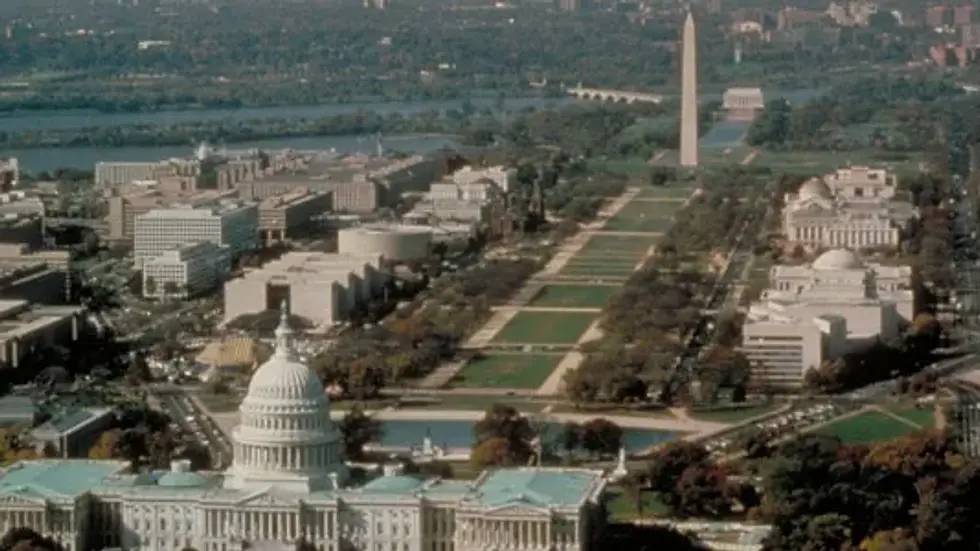
Unlike Boston or Philadelphia, where revolution unfolded in streets already crowded with colonial life, Washington was imagined afterward. It was deliberately designed as a physical expression of revolutionary ideals. Power would be visible but constrained. Memory would be monumental but civic. The nation’s future would be staged here, on land that was once farms, forests, and river crossings.
As the United States approaches the Semiquincentennial, America’s 250th anniversary, traveling through Washington, D.C. offers a different kind of Revolutionary journey. This is not where independence was declared or battles were fought. It is where the meaning of independence has been argued, commemorated, challenged, and revised for more than two centuries.

This is not a detailed travel guide or an itinerary. It is travel inspiration; an invitation to experience Washington, D.C. as a landscape of memory, power, and unfinished promises. It encourages exploration of how the Revolution continues to shape the nation’s civic imagination.
The National Mall: Memory Made Visible
Begin where the country gathers to remember itself: the National Mall.

This broad, open space did not exist during the Revolution. Yet, it has become the nation’s primary stage for interpreting Revolutionary ideals: liberty, equality, sacrifice, and civic responsibility.
Washington Monument: Leadership and Restraint
The Washington Monument rises with stark simplicity above the Mall. Unlike triumphal arches or equestrian statues common in Europe, this monument to George Washington avoids grandeur in favor of restraint.
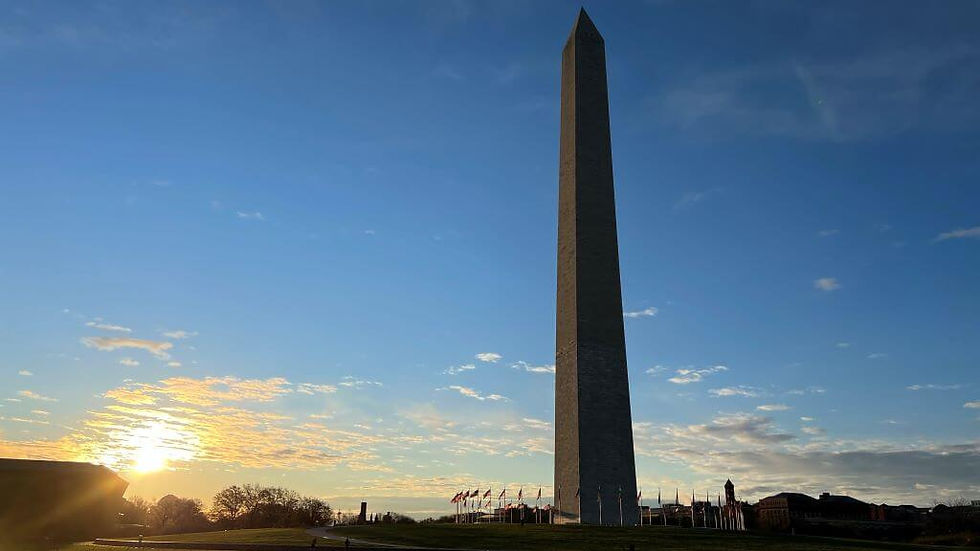
That choice reflects Revolutionary values. Washington’s legacy here is not conquest, but voluntary relinquishment of power, first as commander-in-chief, later as president. For America 250 travelers, the monument invites reflection on leadership defined by limits rather than dominance.
Constitution Gardens: A Quiet Civic Space
Tucked between larger memorials lies Constitution Gardens, a landscaped area often overlooked by visitors rushing between landmarks. Its name alone signals purpose: this is a space dedicated not to a single figure, but to an idea.
Walking here offers a pause, a reminder that constitutions are not static documents, but living frameworks shaped by interpretation and struggle.
Museums That Frame the Revolution’s Meaning
Washington’s museums do not simply recount Revolutionary events. They explore consequences.
National Museum of American History: Ideals in Motion
At the National Museum of American History, the Revolution appears not as an isolated era, but as a foundation repeatedly tested. Exhibits connect 18th-century ideals to later movements for abolition, suffrage, labor rights, and civil rights.
For America 250 travelers, this museum reinforces a crucial insight: the Revolution’s promises expanded not through inevitability, but through pressure applied by generations who insisted on inclusion.
National Archives: Words That Still Govern
Few places make the Revolution feel as immediate as the National Archives. Seeing the Declaration of Independence and the Constitution in person strips away abstraction. The documents are fragile. The ink is faded. The authority they carry comes not from permanence, but from continued consent.
Standing here during the Semiquincentennial is a powerful reminder that these texts endure only because people keep arguing over them.
The National Museum of African American History and Culture: Liberty Measured Against Reality
No museum in Washington reframes the American Revolution more powerfully than the National Museum of African American History and Culture.

While the Revolution is often remembered through documents and monuments, this museum asks a more difficult question: Who was liberty for? Its galleries trace African American history from the colonial era forward. It makes clear that the nation’s founding ideals were proclaimed in a world already structured by slavery, racial hierarchy, and exclusion.
Revolutionary-era exhibits connect the struggle for independence to the lived experiences of enslaved and free Black Americans. These individuals heard the language of liberty even as they were denied its protections. Visitors encounter stories of resistance, petitioning, military service, and faith communities that used Revolutionary rhetoric to press claims for freedom long before the nation was willing to grant it.
For America 250 travelers, this museum is essential because it refuses nostalgia. It does not treat the Revolution as a finished achievement but as a moral starting point. Its promises were immediately tested and repeatedly postponed. In doing so, it deepens the meaning of nearby sites like the National Archives and the Washington Monument. It reminds visitors that founding documents and symbols must be measured against the realities they produced.
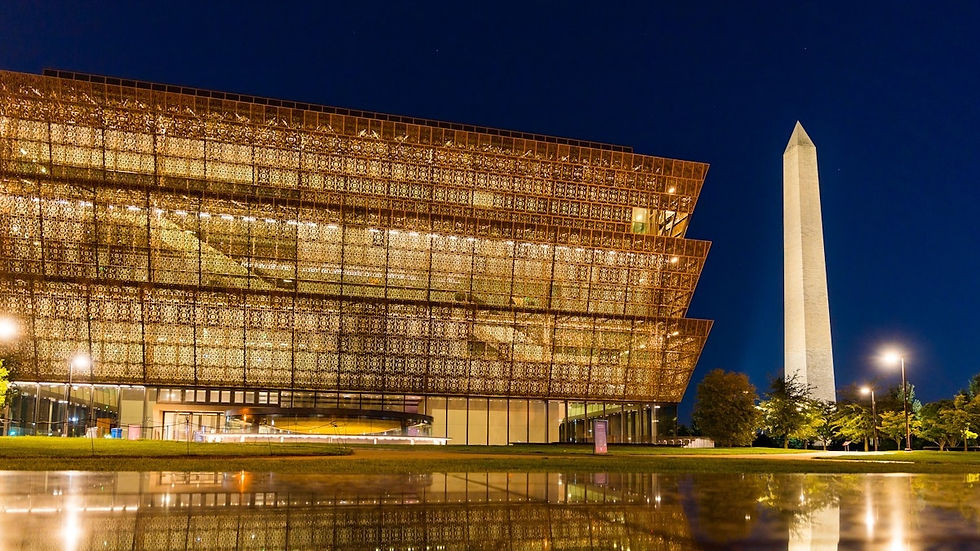
A visit here reshapes the rest of your time in Washington. Afterward, monuments read differently. Words like liberty and equality feel heavier, earned not by declaration alone, but by generations who insisted those ideals apply to them as well.
Revolutionary Echoes Beyond Monuments
To understand Washington’s relationship to the Revolution, you must move beyond the monumental core.
Georgetown: A Port Older Than the Capital
Before Washington existed, Georgetown was already a working port town. Walking its cobblestone streets, especially near the Old Stone House, reveals a pre-capital landscape shaped by trade, slavery, and river commerce.
Georgetown connects Washington’s Revolutionary memory to the colonial economy that made independence possible...and morally fraught.
Alexandria: The Revolution at Human Scale
Just across the Potomac lies Alexandria, Virginia, where Revolutionary-era buildings cluster tightly. Sites such as the Carlyle House anchor stories of military planning, elite power, and enslaved labor.
Alexandria’s streets feel intimate. The Revolution here unfolds at walking speed, reminding visitors that nation-making happened alongside daily life.
Forts, Rivers, and the Geography of Defense
Although Washington was founded after the Revolution, its location reflects Revolutionary anxieties about defense and control.
Fort Washington: Guarding the Capital’s Approach

South of the city, Fort Washington Park overlooks the Potomac River. While most visible fortifications date to the War of 1812, the site embodies Revolutionary lessons: control the waterways, protect the seat of government, expect vulnerability.
The fort’s isolation today, via wind, water, and distance, creates a contemplative experience far removed from the crowds of the Mall.
Off the Beaten Path: Quieter Revolutionary Reflections
As America 250 approaches, Washington’s major memorials will draw enormous crowds. Some of the city’s most meaningful Revolutionary connections, however, exist in quieter places.
Congressional Cemetery: Memory Without Marble
At Congressional Cemetery, Revolutionary-era figures rest alongside later generations of public servants and ordinary citizens. Unlike Arlington, this cemetery feels personal rather than ceremonial.
Gravestones tell fragmented stories; names remembered unevenly, ideals honored imperfectly. It is a fitting place to consider how nations choose what (and whom) to remember.
The Potomac’s Overlooked Crossings
River walks along less-traveled stretches of the Potomac reveal how geography shaped political imagination. Ferries, bridges, and fords once connected colonial communities long before Washington became the capital.
These landscapes remind visitors that the Revolution was regional before it was national and was rooted in movement, trade, and connection.
Tudor Place & Neighborhood History
In Georgetown, Tudor Place offers insight into how Revolutionary legacies became family inheritance. Home to descendants of Martha Washington, the site illustrates how memory, power, and property intertwined after independence.
The surrounding neighborhood is quiet, residential, and often missed. It adds important context that large museums cannot.
Washington and the Unfinished Revolution
Washington, D.C. also forces America 250 travelers to confront a difficult truth: the Revolution’s ideals were never fully realized here.
The city was built with enslaved labor. It denied residents full representation for generations. Its monuments proclaim liberty while surrounding communities have long fought for political voice.
Museums and historic sites increasingly address these contradictions. They frame Washington not as a perfected embodiment of Revolutionary ideals but as a place where those ideals remain contested.

That honesty makes Washington essential to the Semiquincentennial conversation.
How to Experience Washington for America 250 (Without Rushing It)
Washington rewards reflection.
Visit early or late. Sunrise and dusk transform monuments into contemplative spaces.
Pair monuments with neighborhoods. Balance grand symbols with lived environments.
Follow the water. Rivers reveal strategy, vulnerability, and connection.
Accept tension. Washington is a city built on ideals that remain unfinished.
What Washington Gives the Semiquincentennial
By the time you leave Washington, D.C., the American Revolution no longer feels confined to the 18th century.
It feels present in arguments over power, representation, memory, and responsibility. The capital does not celebrate the Revolution as a completed achievement. It stages it as an ongoing project.
That may be Washington’s greatest gift for America 250: not reassurance, but perspective. The reminder that independence was not an ending, but a beginning. The work imagined by the Revolution still asks something of us when we walk these spaces, read these words, and stand before these monuments.
Traveling Washington, D.C. for the Semiquincentennial is not about checking sites off a list. It is about encountering the Revolution as an idea made visible and realizing that its future, like its capital, was always meant to be built over time.

For more America 250 travel ideas: Introduction, Middle Colonies, Southern Colonies, and New England. Philadelphia, Boston, New York, Washington D.C.
For more history look here and to our YouTube channel.


Comments