
America 250 Travel Inspiration: Walking the Birthplace of the Revolution in Boston
- Greg Thompson
- Jan 22
- 6 min read

Walking the Spark of a Revolution
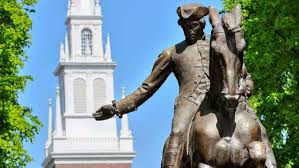
Boston does not let the American Revolution rest quietly in the past. It interrupts your walk. It rises in brick and bell towers. It slips into side streets and burial grounds and harbor winds. Few places in the United States carry Revolutionary memory as densely, or as insistently, as Boston and its surrounding towns.
As the nation approaches the Semiquincentennial (America’s 250th anniversary in 2026) Boston offers something rare: the chance to experience the Revolution not as a single event, but as a chain reaction. Here, resistance hardened into rebellion. Protest turned into bloodshed. Ideas once whispered became declarations that reshaped the world.

This is not a detailed travel guide or a checklist. It is travel inspiration, an invitation to walk slowly through Boston and its neighboring landscapes, to feel how close together the Revolution’s causes and consequences truly were, and to encounter the past as something still uncomfortably present.
Boston National Historical Park: where the Revolution takes physical form
Begin where the city gathers its Revolutionary story most visibly: Boston National Historical Park. Rather than a single enclosed site, the park is a constellation of places stitched together by the Freedom Trail; a red-brick line that guides visitors through the heart of Revolutionary Boston.

The brilliance of the Freedom Trail is not that it simplifies history, but that it compresses it. Within a walkable distance, you move from protest to massacre, from meetinghouse to harbor, from debate to war. The city becomes the classroom.
Faneuil Hall: voices raised in public

At Faneuil Hall, often called the “Cradle of Liberty,” political speech took on a dangerous power. Here, Bostonians gathered to challenge imperial authority, argue over rights, and test the limits of dissent.
Standing inside today, the space feels intimate rather than grand. It is a reminder that revolutionary ideas did not emerge from distance or abstraction, but from crowded rooms filled with disagreement.
Old State House: empire meets resistance
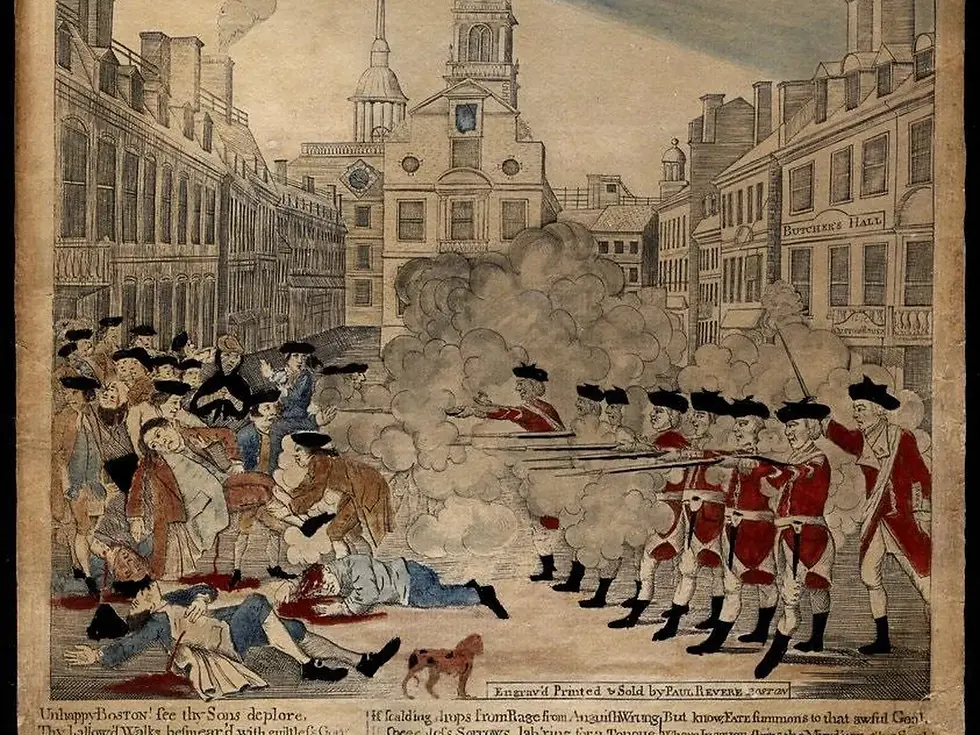
Just steps away, the Old State House anchors one of the Revolution’s most volatile moments. The Boston Massacre unfolded outside its doors in 1770, transforming tension into bloodshed.
The building’s location, embedded in modern downtown Boston, reinforces a key lesson: revolutionary history here does not sit apart from contemporary life. It insists on being encountered.
Sacred spaces and civic courage
Boston’s Revolutionary story is inseparable from its churches and meetinghouses; spaces where faith, politics, and community collided.
Old North Church: a signal in the night
Few images are as iconic as Old North Church, where lanterns signaled the movement of British troops in April 1775. Yet the church’s power lies less in the signal itself than in what it represented: collective risk.
The people involved were not soldiers acting under orders. They were civilians making choices, knowing the consequences could be severe. Old North reminds visitors that revolutions depend on ordinary people willing to act.
King’s Chapel & Granary Burying Ground: memory beneath your feet

At King's Chapel and the nearby Granary Burying Ground, the Revolution feels layered and intimate. Graves of figures like Samuel Adams and Paul Revere lie beneath the noise of the modern city.
These sites invite reflection rather than spectacle. They suggest that the Revolution’s participants did not see themselves as founders of something permanent—but as people responding to crisis.
Museums that widen the lens
Boston’s museums deepen the Revolutionary story by complicating it—placing familiar events within broader contexts of empire, inequality, and change.
Museum of African American History: liberty contested

The Museum of African American History, located on Beacon Hill, is essential for any America 250 journey. It tells the story of Black Bostonians who lived amid revolutionary rhetoric while confronting enslavement, discrimination, and exclusion.
Here, liberty is not assumed; it is demanded. The museum reframes Boston’s Revolution as incomplete, shaped by people who pushed its ideals further than many founders intended.
Massachusetts State House: revolution to republic

The Massachusetts State House stands as a bridge between rebellion and governance. Its golden dome symbolizes the transition from resistance to responsibility, an evolution still unfolding.
Visiting the State House grounds encourages reflection on how revolutionary ideals are translated (or lost) in institutions.
Stepping beyond the city: where war begins
To understand Boston’s role in the Revolution, you must leave the city, briefly, and follow the roads outward.
Lexington and Concord: the point of no return
At Minute Man National Historical Park, the Revolution turns irrevocably violent. The battles of April 19, 1775 transformed protest into war.

Walking Lexington Green and the path to Concord’s North Bridge reveals how ordinary landscapes became global symbols. The distances are short. That closeness matters. It shows how quickly events escalated and how fragile peace had become.
Bunker Hill: memory and meaning
Back in Boston, the Bunker Hill Monument commemorates one of the war’s earliest major battles. The monument rises high above Charlestown, visible across the city.
Yet the real lesson of Bunker Hill is not triumph. It is resolve. The battle proved that colonial forces could stand against the British army though at enormous cost. For America 250 travelers, it is a reminder that symbolic victories often emerge from loss.
Off the beaten path: quieter Revolutionary Boston
As America 250 draws larger crowds, some of Boston’s most powerful Revolutionary sites will be the quieter ones. They will be the places where history lingers without lines or fanfare.
Dorchester Heights: strategy without spectacle

At Dorchester Heights, Washington positioned artillery that forced the British evacuation of Boston in 1776. Today, the site is a peaceful neighborhood park with sweeping views of the harbor.
Few tourists linger here, yet its strategic importance was decisive. Dorchester Heights teaches that revolutions are often won not in dramatic clashes, but through careful positioning and patience.
Boston Harbor Islands: revolution by water
The Boston Harbor Islands offer an entirely different perspective on Revolutionary Boston. Islands like Georges and Castle reveal how the harbor shaped defense, supply, and vulnerability.
A ferry ride places distance, physical and mental, between you and the city. The Revolution begins to feel maritime, imperial, and global rather than purely urban.
Copp’s Hill Burying Ground: overlooked vantage point
Often overshadowed by Granary, Copp's Hill Burying Ground offers one of the best views of the city and harbor. British forces used the hill during the siege of Boston; today it remains calm and contemplative.
This is a place to pause. A place to consider how perspective, both literal and historical, shapes understanding.
Boston’s Black and maritime Revolutionary history
Boston’s Revolution unfolded along racial and economic fault lines that are impossible to ignore.
Black Bostonians petitioned for freedom, sued for their rights, and used revolutionary rhetoric to challenge enslavement. Sailors, dockworkers, and shipbuilders, many of them marginalized, kept the city alive while elites debated independence.
Local historic sites, waterfront walks, and neighborhood museums help recover these stories. America 250 invites travelers to see Boston not just as a birthplace of liberty, but as a testing ground for its meaning.
How to experience Boston for America 250 (without rushing it)
Boston rewards a certain pace.
Walk early or late.Morning and evening soften the city and reveal its Revolutionary layers.
Mix crowds with quiet.Pair the Freedom Trail with lesser-known sites like Dorchester Heights.
Let geography teach.Distances are short. That proximity is the lesson.
Embrace tension. Boston’s Revolution is inspiring—but unfinished. Sit with that truth.
What Boston gives the Semiquincentennial
By the time you leave Boston, the American Revolution no longer feels distant or abstract. It feels immediate—compressed into streets and buildings still in use, still argued over, still alive.
Boston offers America 250 travelers something invaluable: a sense that history is not sealed. It is walked through, inherited, questioned, and reshaped. The Revolution here is not a monument—it is a conversation.
And perhaps that is Boston’s greatest gift at the Semiquincentennial: not certainty about the past, but clarity about the responsibility that comes with remembering it.

For more America 250 Travel ideas: Middle Colonies, Southern Colonies, and New England.
For more History look here and to our YouTube channel.


Comments