
America 250 Travel Inspiration: Revolutionary War Sites of the Southern Colonies
- Greg Thompson
- 2 hours ago
- 7 min read

Where the Revolution Was Won — and Where Its Contradictions Were Laid Bare
If New England tells the story of how the American Revolution began, and the Middle Colonies show how it nearly failed, the Southern Colonies reveal how it was won... and at what cost.

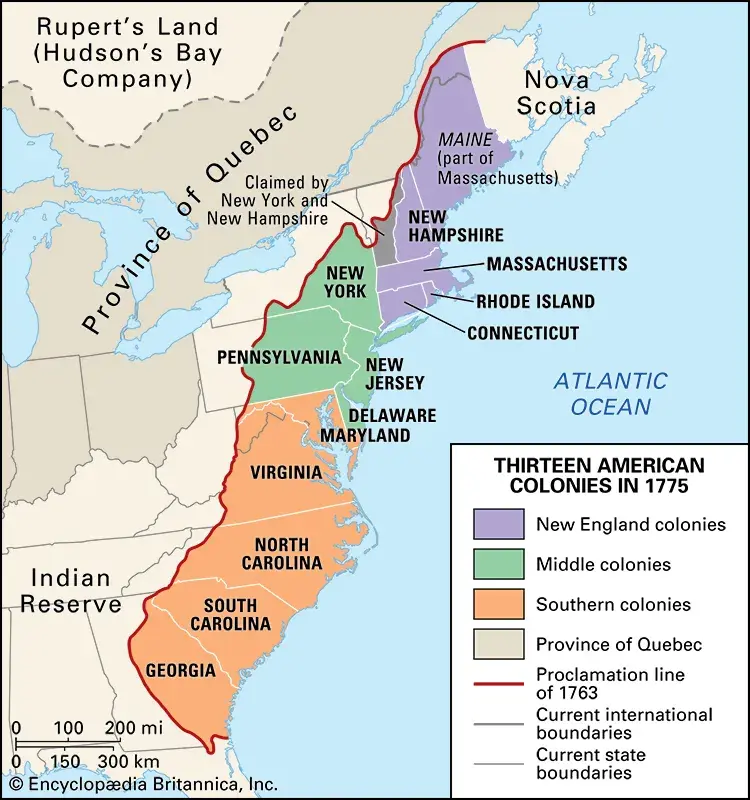
Virginia, Maryland, North Carolina, South Carolina, and Georgia formed the Revolution’s final, decisive theater. Here, the war stretched longer, burned hotter, and tore deeper into civilian life. This was a landscape of plantations and ports, backcountry farms and enslaved labor camps, Loyalist strongholds and Patriot militias. It was a war fought not only between empires, but within communities and often within families.
As the United States approaches the Semiquincentennial, America’s 250th anniversary, traveling through the Southern Colonies offers a sobering, powerful, and deeply necessary perspective. These are places where ideals of liberty collided most starkly with slavery; where independence was secured even as freedom remained brutally unequal; and where the Revolution’s aftermath shaped American identity in ways still visible today.
To travel the South for America 250 is not to chase a victory lap. It is to walk into complexity, to stand where triumph and contradiction coexist, sometimes uncomfortably close.

Virginia: the Revolution’s political mind and military endgame
No colony looms larger in the Revolutionary imagination than Virginia—and for good reason.

Williamsburg: where revolution was debated before it was fought
Begin in Colonial Williamsburg, one of the most immersive historic environments in the United States. Unlike a single preserved building or battlefield, Williamsburg operates as an interpretive ecosystem of streets, taverns, workshops, and government buildings, where visitors encounter the Revolution as an unfolding civic crisis.
In the years leading up to independence, Williamsburg was a center of radical political thought. It was here that figures like Patrick Henry, Thomas Jefferson, and George Mason argued over representation, sovereignty, and rights. The Capitol at Williamsburg and Governor's Palace anchor these debates in physical space.
For America 250 travelers, Williamsburg offers something rare: the chance to hear the arguments of the Revolution, not just their outcomes. Interpreters increasingly foreground the lives of enslaved people, free Black Virginians, women, and laborers; voices long absent from earlier tellings. This fuller narrative makes Williamsburg an essential starting point for understanding how liberty was imagined and limited at the same time.
Yorktown: where the war effectively ended
From Williamsburg, travel east to Yorktown Battlefield, preserved today as part of Colonial National Historical Park.

Yorktown marks the culmination of the American Revolution’s military campaign. In 1781, American and French forces trapped General Cornwallis’s army here, forcing a surrender that effectively ended major fighting. The geography itself tells the story: rivers, earthworks, siege lines, and constrained movement.
Walking the battlefield today, the land feels almost peaceful with open fields, quiet roads, and distant water. That calm is instructive. It reminds visitors that world-altering events often unfold in places that later seem ordinary. For America 250, Yorktown is less about celebration than reflection: victory depended on alliances, endurance, and timing, not destiny.

For more details on Southern Colonies travel consider this:
Journeys Thorugh History is an Amazon Affiliate and using our link to products on Amazon supports our work. Thank you.
Maryland: revolution at the edge of empire
Maryland’s Revolutionary story is shaped by its position -- geographically between North and South, politically between moderation and resistance.
Annapolis: government in motion
In Annapolis, the Revolution feels administrative and human at once. This was briefly the nation’s capital, and it was here that George Washington resigned his commission as commander-in-chief, affirming civilian control of the military.
The Maryland State House anchors this story. Standing in its chambers, visitors encounter one of the Revolution’s most consequential moments—not a battle, but an act of restraint. For America 250 travelers, this site underscores that the Revolution’s success depended as much on what leaders refused to do as on what they did.
Fort McHenry: the war’s unfinished business

Although best known for its role in the War of 1812, Fort McHenry belongs in an America 250 itinerary because it represents continuity rather than closure. The Revolution did not resolve all questions of sovereignty or security. Fort McHenry stands as a reminder that independence required defense—and that the young republic’s ideals would be tested again and again.
Baltimore’s broader Revolutionary-era sites and museums add texture, revealing a port city shaped by commerce, privateering, and the constant presence of imperial power.
North Carolina: a revolution fought in homes and fields
If Virginia presents the Revolution’s leadership and conclusion, North Carolina shows its intensity at ground level.
Guilford Courthouse: the battle that broke the British strategy
At Guilford Courthouse National Military Park, visitors encounter one of the war’s most paradoxical engagements. In 1781, British forces technically won the battle, but at such cost that their southern strategy collapsed.
The park’s wooded trails and open clearings invite slow exploration. Unlike more formal battlefields, Guilford feels intimate and disorienting, reflecting the chaotic nature of southern warfare. Militias melted into forests; lines blurred; civilians were caught in between.
For America 250, Guilford Courthouse teaches a critical lesson: wars are not always decided by victories. Sometimes they are decided by exhaustion.
Local sites: the Revolution in daily life
Across North Carolina, small historic sites and local museums preserve stories of backcountry resistance, Loyalist communities, and the violence that accompanied internal division. Farmsteads, meetinghouses, and county courthouses reveal how the Revolution penetrated everyday existence.
America 250 travelers who seek out these lesser-known places often come away with the strongest impressions. The Revolution here feels personal...and unsettling.
South Carolina: civil war within a revolution
South Carolina experienced the Revolution as something close to civil war.

Charleston: prize of the southern colonies
In Charleston, the Revolution is inseparable from the city’s role as a major Atlantic port and slave-trading center. Walking the historic district today, past preserved homes, churches, and waterfronts, you confront the paradox at the heart of the southern Revolutionary experience: a fight for liberty deeply entangled with human bondage.
Sites connected to Charleston’s Revolutionary era reveal repeated occupation, shifting control, and civilian suffering. The city fell to British forces in 1780, dealing a severe blow to the Patriot cause in the South. Its eventual recovery underscores how fragile independence remained even late in the war.
Camden and the backcountry war
Beyond Charleston, inland sites such as Camden Battlefield (preserved through partnerships between the National Park Service and local organizations) illustrate the brutal nature of southern fighting. Here, Loyalist and Patriot militias clashed with extraordinary ferocity.
South Carolina’s America 250 story is one of fragmentation, neighbor against neighbor, enslaved people seizing opportunities for escape, and violence spilling far beyond formal battle lines.
Georgia: the Revolution’s southernmost frontier
Georgia’s Revolutionary experience unfolded on the margins. Geographically distant from the early centers of rebellion, yet deeply affected by imperial rivalry.

Savannah: occupation and endurance
In Savannah, the Revolution is a story of control and consequence. British forces captured the city early and held it for much of the war, making Georgia a Loyalist stronghold. Today, Savannah’s historic squares and preserved structures offer a strikingly beautiful setting for difficult history.
Local museums and historic houses interpret the city’s wartime experience, including the role of enslaved Africans and African Americans who navigated shifting promises of freedom. For America 250 travelers, Savannah emphasizes that independence arrived unevenly—and sometimes not at all.
Rural Georgia: revolution on the edge

Beyond Savannah, smaller sites and markers across Georgia trace skirmishes, militia activity, and the war’s impact on frontier communities. These places remind visitors that the Revolution was not confined to grand cities or decisive battles—it reached into remote areas, altering lives far from the spotlight.
Museums and memory in the southern colonies
Across the Southern Colonies, museums play an especially vital role in America 250 interpretation.
Plantation museums, state historical institutions, and local heritage centers increasingly grapple with the full scope of Revolutionary-era life: wealth built on slavery, promises of liberty denied, and the long aftermath of independence. When done thoughtfully, these institutions offer visitors a chance not just to learn, but to reflect.
For the Semiquincentennial, many southern sites emphasize inclusive storytelling—centering enslaved people, Indigenous nations, women, and the poor as historical actors rather than footnotes. This approach does not diminish the Revolution; it deepens it.
How to travel the Southern Colonies for America 250
A journey through the southern Revolutionary landscape benefits from intention.
Pair triumph with contradiction. Visit Yorktown—but also visit plantations and enslaved quarters. Let victory and injustice coexist in your understanding.
Balance major sites with local ones. National parks provide structure; local historic sites provide intimacy.
Travel slowly and regionally. Distances are larger in the South. Allow time for landscapes to speak.
Listen to what feels uncomfortable. The Southern Colonies tell the Revolution’s most challenging truths. Those truths are essential to the Semiquincentennial’s purpose.
Summer Travel. Be aware that heat and humidity will be an issue in the south during the summer months. Dress appropriately, hydrate, and wear mosquito repellant.
What the South gives the Semiquincentennial
By the end of an America 250 journey through Virginia, Maryland, the Carolinas, and Georgia, the Revolution no longer feels like a clean founding moment. It feels like a negotiation written in blood, labor, and unresolved promises.
The Southern Colonies show us that independence was achieved without justice—and that the gap between those two ideas would shape the nation for centuries. To stand in these places in 2026 is not simply to commemorate the past, but to confront its legacy.
And that may be the most powerful travel inspiration of all.
The Semiquincentennial invites Americans not just to remember where the nation began, but to ask what kind of nation those beginnings made possible—and what responsibilities we inherit when we walk the ground where history was won, lost, and still unfinished.


Comments